1980s
Refugees Lose Their Sight
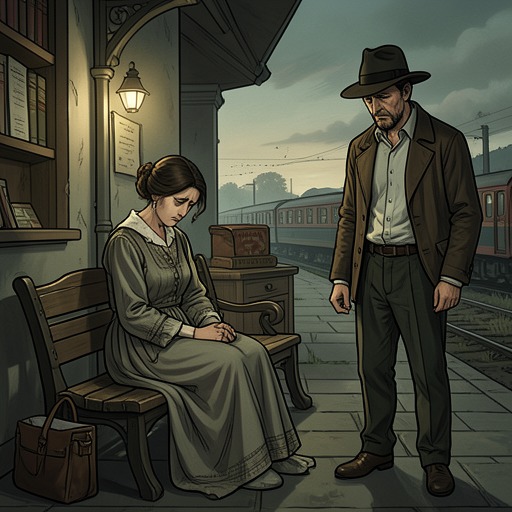
In [California](entity:location-recall-location-california-fd5bbc3f2eb4), Cambodian women who had fled the [Khmer Rouge](entity:organization-recall-organization-khmer-rouge-2d087773866a) described losing their sight after enduring atrocities, rape, torture, and the murder of loved ones. Doctors found no damage to their eyes or brains, and the narrator presents their apparent blindness as a psychosomatic response to unbearable trauma.
The episode establishes a central question of the book: what happens when suffering exceeds what a person can consciously bear? The mind, the narrator suggests, may shut out what it cannot take in.
During the narrator’s childhood
The Blind Neighbor
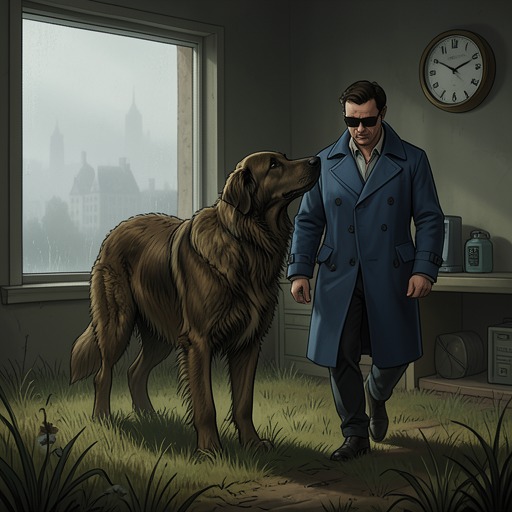
When the narrator was absorbed in fairy tales, a blind man lived nearby with his parents. His eyes were hidden behind dark glasses, and to the child he seemed less an ordinary neighbor than a possible movie star or secret agent.
In a story she wrote, he became a wounded prince, and her tears restored his sight. The childhood invention anticipates the adult narrator’s recurring entanglement of grief, vision, fairy-tale transformation, and the wish to rescue someone through love.
During the narrator’s childhood
The House Becomes a Tomb
At a friend’s winter birthday party, the children played hide-and-seek in a dark Victorian house. After the narrator finished counting, the lively rooms seemed suddenly emptied of everyone but her. She was found sprawled on the carpet after fainting and vomiting.
The adults attributed it to excitement and cake, but the child understood the terror differently: people had vanished and might never return. The memory later gives shape to the narrator’s disorientation after a death that feels, at first, like an inexplicable disappearance.
Early in the narrator’s writing life
A Teacher’s Warning
The narrator’s first writing teacher warned that anyone who could pursue another profession should do so instead of becoming a writer. The advice made the vocation sound less like a route to fulfillment than a costly commitment to frustration and solitude.
Years later, the narrator recognizes the same warning in her deceased friend’s counsel to students. It becomes one strand in her meditation on whether writing can justify the unhappiness and damage it brings.
When the narrator was barely out of school
The Classroom Romance
The narrator met her future friend while he was a young instructor and she was his student. He described a great teacher as a seducer and believed that love could not be banished from the classroom. She was drawn to his authority and to the knowledge he seemed able to transmit.
After the school year, their friendship continued. During the summer, while he began courting Wife One, he proposed that they sleep together. The narrator trusted him and agreed, an intimacy that would remain complicated by their different hopes for the relationship.
That summer
The Affair Ends
After the narrator and her friend had sex, he told her that trying to become more than friends had been a mistake. She was mortified and withdrew, first pretending to be ill and then pretending to be out of town; when they finally met again, she had also been genuinely sick.
The tension between them had changed. Their friendship resumed without the uncertainty that had surrounded the affair, and it grew into the longest-lasting relationship in the narrator’s life. She would later wonder whether she had truly escaped heartbreak or merely accepted a more ambiguous attachment.
Early in the friend’s adult life
Wife One’s Marriage
The friend and Wife One shared an intense and genuine love, but he was unfaithful. Before the marriage ended, she suffered a breakdown and was hospitalized; afterward, she quickly found another partner, a turn that wounded him.
Their history remained a powerful emotional presence for the narrator. The friend later swore he would never marry again, but his relationships continued to overlap with the long, private bond he maintained with the narrator.
Years before the friend’s death
A Berlin Weekend
While the narrator was living in [Berlin](entity:location-recall-location-769cdeac2511) on a fellowship, her friend passed through on a book tour. His translated novel was unexpectedly successful, and the two spent a long weekend together, walking through a city both admired.
Because he was single and they were abroad, strangers sometimes took them for a married couple. The narrator remembers feeling unusually close to him and bereft when he left. The memory would return painfully after his death, intensifying her uncertainty about what their relationship had meant.
Across the friend’s teaching career
A Career of Affairs
The friend pursued romances with students and former students, insisting that such relationships were permissible and that erotic feeling was inseparable from teaching. The narrator had once been thrilled when he called her “dear,” and she knew her own intimacy with him made her judgment less straightforward.
One former student accused him of retaliating against her with a grade after she rejected his advances. An investigation found the grade defensible but criticized his judgment and propriety. He received a warning, ignored it, and continued his behavior for years.
Late in the friend’s teaching career
The Students’ Letter
A group of women students wrote to the friend asking him to stop addressing them as “dear.” They described the habit as demeaning and inappropriate. He changed his behavior, but he sulked and complained to the narrator that the students had behaved pettily and ganged up on him.
The narrator answered that silence had never proved that students approved. Their disagreement exposed the limits of the narrator’s loyalty: she understood the friend’s grievances but could not pretend that power and propriety were irrelevant.
After the friend turned fifty
The Loss of Desire
One night the friend arrived drunk and described his pursuit of a young woman who was willing to sleep with him but did not desire him. He could bear her lack of love more easily than her lack of wanting him, and the narrator watched his humiliation become a recurring pattern.
Later, a mirror in a hotel bathroom forced him to confront how age had changed his sexual appeal. He described the loss as a kind of castration, an erosion of the identity he had built around seducing women. The narrator saw his fear of becoming someone he could not recognize.
Before the friend’s death
The Cat’s Final Injection
One of the narrator’s elderly cats developed a mass and could no longer eat. The narrator agreed to euthanasia, but the first injection went wrong; the cat became alert, touched her wrist, and seemed to the narrator to be pleading for help rather than death.
The veterinarian took the cat out of the room and returned with her dead. The narrator’s immediate question—what had the veterinarian done?—became a lasting source of guilt. The episode explains why she later resisted taking another animal into her care, even as she became responsible for [Apollo](entity:character-recall-character-d4cb24302c0b).
The year before his death
The Friend’s Depression
The friend endured a severe depressive period, struggled to get out of bed, and stopped writing. A back injury kept him from exercising and even made walking painful, disrupting the routine he described as essential: if he could not walk, he could not write.
His wife later recalled that the crisis had lifted. His back had healed, he was walking and running again, socializing, and excited by a new project. The apparent recovery would make his sudden death especially difficult for those left behind to explain.
The summer before the friend’s death
The Dog in the Park
While running one morning, the friend found a huge harlequin [Great Dane](entity:creature-recall-creature-great-dane-60316c9b6a0e) standing on an overhang against the sky. The dog had no collar or tags, and the friend tried to find its owner before deciding to keep him.
He sent the narrator a photograph of the dog beside him and asked for help choosing a name. After considering several possibilities, he settled on [Apollo](entity:character-recall-character-d4cb24302c0b). The discovery became the beginning of a bond that would outlast the friend’s life and place a grieving animal in the narrator’s care.
The year before his death
The Friend Leaves Teaching
After years of complaints that teaching had become demoralizing, the friend quit. He had once said that students would keep him from suicide, so his friends had not treated his departure from the classroom as a warning, even though he enjoyed teaching and needed the income.
He later complained that literature had lost its influence and that students and readers seemed less interested in how books were written. His disillusionment with teaching and fiction formed part of the background to his death, but the narrator cannot turn that background into a complete explanation.
Before the friend’s death
The Research Assignment
The narrator agreed to teach writing at a treatment center for survivors of human trafficking. Her friend encouraged her to write about the work and introduced the idea to an editor, who offered her a contract and a deadline.
The assignment joined professional opportunity to an increasingly troubling question: whether writing about suffering could help the writer, bear witness for victims, or merely turn other people’s pain into material. The narrator’s doubts would eventually keep her from finishing the piece.
Near the beginning of the year he died
The Last Conversation
The last subject the narrator and her friend discussed while he was alive concerned her research. Afterward, he sent an email with a list of books that might help, followed by seasonal wishes for the new year.
The ordinary brevity of the exchange became fixed in memory. There was no farewell message to interpret and no final conversation that could resolve what was coming; the email was simply the last trace of their shared life before the friend’s death.
Early in the new year
The Friend’s Suicide
The friend died by suicide near the start of the year. He left no note, and the timing briefly made it possible for others to imagine that the act had been a resolution, though the narrator knew he had spoken about suicide many times before.
His death left the narrator with grief, anger, and a persistent inability to accept that it had been a choice. She repeatedly experienced it as a freak accident or an impossible interruption, even while knowing that no accumulation of facts could disclose exactly why he acted when he did.
After the friend’s death
The Memorial Gathering
The friend’s memorial surprised people who knew he had said he wanted no such event. Guests speculated about his wives and girlfriends, networked, discussed literary feuds, and watched a slideshow of his lost youth. His third wife appeared composed and radiant, while the narrator left early.
At the gathering, the narrator heard someone say, “I wish I could pray,” and another ask what was stopping him. The reply—“He is”—captured the way the dead seemed to retain power over the living. The narrator also felt that public tributes made the friend seem less real, like a hologram.
Soon after the memorial
The Widow’s Invitation
The friend’s third wife asked to meet the narrator at a cafe near the brownstone. The narrator dreaded the encounter, fearing both the house and any formal ritual of remembrance; she did not want to hear other people’s versions of the dead friend or to revisit her own complicated place in his life.
The widow spoke about the friend’s last months. He had recovered from depression, resumed exercise and socializing, and was absorbed in a new writing project. Her account sharpened the mystery: the signs of renewed life did not make his death less real, but made it harder to understand.
After the friend’s death
Apollo Is Sent Away
After the friend died, [Apollo](entity:character-recall-character-d4cb24302c0b) waited by the door, refused food for a time, and sometimes made a strange, ghostlike howl. The widow could not bear the dog’s grief in the house and put him in a kennel, where his care was expensive and his future uncertain.
She explained that the dog did not understand that his owner was never coming home. The narrator thought of famous dogs that waited for dead masters, and of how human beings turn such behavior into legends of loyalty. The widow asked whether the narrator could take Apollo, at least temporarily.
Shortly after the widow’s request
The Narrator Takes Apollo
The narrator initially refused. Her apartment building prohibited dogs, and her small apartment seemed unsuitable for a [Great Dane](entity:creature-recall-creature-great-dane-60316c9b6a0e). But the widow could not keep [Apollo](entity:character-recall-character-d4cb24302c0b), did not want to be bound to a dog she had never wanted, and feared that he would spend the rest of his life waiting at the brownstone door.
The narrator finally took him home. Apollo was withdrawn and appeared to have given up hope of returning to his former life. The decision brought the narrator a living connection to the friend, but also a new responsibility she had not expected and could not easily escape.
Apollo’s first night with the narrator
Apollo Claims the Bed
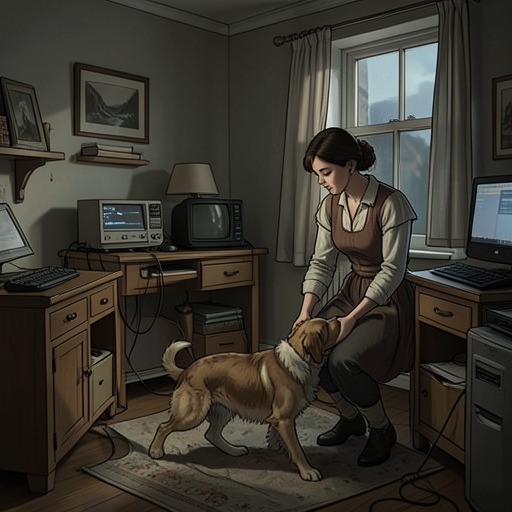
[Apollo](entity:character-recall-character-d4cb24302c0b) explored the apartment without much interest, climbed onto the bed, and collapsed. When the narrator tried to displace him, he growled. She did not believe he would attack her, but the size of the animal left little doubt about who controlled the bed.
That night, Apollo examined her in the dark, resting a heavy paw on her chest and sniffing along her body before returning to sleep. The intimate encounter began a relationship neither understood: Apollo remained distant by day, yet sought the narrator with strange intensity at night.
Within Apollo’s first days at home
The Apartment Rule
The building superintendent, [Hector](entity:character-recall-character-8783674b3cfc), told the narrator that [Apollo](entity:character-recall-character-d4cb24302c0b) could not stay, even temporarily. The narrator knew of a [New York City](entity:location-recall-location-new-york-city-65df0a129d4c) rule under which a landlord’s failure to act during three months of an openly kept dog could protect a tenant from eviction, but she had not planned to test it.
Apollo was impossible to hide. Neighbors saw him in the stairwell and on the street, and his size made him a neighborhood spectacle. The narrator risked losing a rent-stabilized apartment she had protected for decades, yet by then she was already reluctant to send him away.
During Apollo’s early stay
The First Long Absence
After the narrator stayed out for drinks and left [Apollo](entity:character-recall-character-d4cb24302c0b) alone for roughly five hours, she returned to a wrecked apartment. The dog had overturned her desk chair, chewed papers, shredded a paperback, and torn apart a couch pillow.
The destruction suggested that Apollo’s quiet daytime withdrawal concealed distress. The narrator’s fantasies of him rescuing tenants or frightening off burglars could not change the more immediate fact: he was a bereaved animal who struggled when left alone, and her home was not equipped for his grief.
During the first weeks together
The Name and the Leash
The narrator wondered about [Apollo](entity:character-recall-character-d4cb24302c0b)’s unknown past and even about whatever name he might once have had. She considered the human impulse to name animals an assertion of dominion, and recalled a story in which [Eve](entity:character-recall-character-eve-09bb1968b5f4) returned names to the animals to undo that separation.
Apollo’s name, inherited from the friend, became a link to the dead man and a reminder that the dog’s history remained unknowable. The narrator could care for him without knowing where he came from or what he understood, but she could not stop trying to imagine the life behind his silence.
Several weeks after Apollo moved in
The Threat of Eviction
[Hector](entity:character-recall-character-8783674b3cfc) repeatedly warned that [Apollo](entity:character-recall-character-d4cb24302c0b) could not stay and that he had to report the violation. He was not portrayed as cruel; he was doing his job and could risk losing it himself. The narrator, meanwhile, feared that eviction would leave her unable to find another affordable home with such a large dog.
The narrator kept Apollo despite the warnings. She imagined him as a heroic guard dog and searched for reasons to believe that a miracle would make the danger disappear, even as the building’s management began moving toward formal action.
In the months after the adoption
A Dog in Mourning
[Apollo](entity:character-recall-character-d4cb24302c0b) sometimes stopped on walks and refused to move, and his grief took the form of cowering, shaking fits. The narrator’s new veterinarian believed that repeated changes of home had aggravated the dog’s anxiety. He advised exercise, conversation, and massage, while warning that Apollo might never recover fully.
The vet also insisted that the narrator maintain authority over the powerful animal and return him to the floor at night. The narrator was uneasy with the advice to dominate him, but she understood that care required more than sentiment: Apollo’s fear and strength were both real, even if his inner life remained inaccessible.
Years before Apollo’s arrival
The Memory of Beau
The narrator remembered Beau, a large Dane-shepherd cross owned by a boyfriend when she was young. Beau protected her on dark streets, standing between her and men he regarded as threats. She had once enjoyed the attention and the sense of safety his aggression gave her.
Now she wanted something different for [Apollo](entity:character-recall-character-d4cb24302c0b). She did not want him to act as her weapon or bodyguard, or to live in a constant state of vigilance. The contrast helped her see that loving an animal meant resisting the temptation to make it serve her fears.
Some weeks after Apollo’s arrival
The Howling Returns
A neighbor told the narrator that [Apollo](entity:character-recall-character-d4cb24302c0b) was howling again. The sound recalled the widow’s account of the dog waiting for his owner and made clear that the animal’s mourning had not vanished simply because he had changed homes.
The narrator privately decided that Apollo had to forget the dead friend and learn to love her. The wish was both tender and impossible: she wanted a future with the dog, but could not know whether he was still waiting for the person who had found him.
During the narrator’s work at the treatment center
The Victims’ Journals
The women at the trafficking treatment center were invited to write privately in journals, sometimes in their first languages. Some concealed their notebooks; others carried them everywhere, and a few destroyed what they had written as soon as they finished. The psychologist friend allowed each response, including refusal.
The narrator was asked to overlook spelling and grammar in the workshop. The women had endured abuse before trafficking, and some had been sold or endangered by family members. Their writing exposed the limits of any tidy promise that narration could heal trauma.
During the treatment-center research
A Girl Falls Silent
The narrator’s psychologist friend described a fourteen-year-old rescued from captivity in a basement. Although doctors found no physical injury that explained it, the girl would not speak. The center had seen trauma emerge as mutism, blindness, or paralysis.
The account echoed the Cambodian refugees’ psychosomatic blindness and made the narrator confront the body’s capacity to register what language could not hold. The girl’s silence was not an invitation to invent an explanation; it was evidence of suffering whose causes exceeded what the narrator could know.
The narrator recalls the film during her research
Lilya’s Desperate Flight
The narrator remembered a film about [Lilya](entity:character-recall-character-78577e381958), an abandoned girl from the former Soviet Union who was deceived into traveling to [Sweden](entity:location-recall-location-3aa826a5e36a) and forced into sexual slavery. Her one friend, [Volodya](entity:character-recall-character-97853a83fdc7), killed himself after she left, and later appeared to her as an angel.
When Lilya tried to escape again, she jumped from a bridge rather than remain trapped. The real girl whose life inspired the film left letters on her body, through which her story became known. The film unsettled the narrator with its suffering and with the director’s claim that God cared for Lilya.
During the narrator’s workshop research
The Endless Testimony
The workshop participants wrote about weapons, cigarettes, and dolls, many of which had been lost or destroyed. Their stories returned again and again to beatings, restraint, burning, choking, hunger, and fear. The narrator began to experience them as variations of one relentlessly repeated account.
She concluded that real evil was not the colorful, romantic evil of fiction but something monotonous and barren. That recognition deepened her doubt about turning the women’s experiences into an engaging narrative, especially when the writer—not the people who suffered—would receive the book’s attention and reward.
Years before the present narrative
The Psychologist Leaves Fiction
The narrator’s psychologist friend had once published promising stories and received an award for young writers. She later began meditating and came to feel that a literary career demanded ambition, rivalry, self-promotion, and attachment to success, all at odds with the Buddhist practice of letting go.
She did not stop writing entirely: she journaled and wrote private poems, which she regarded as a kind of prayer. But she abandoned the effort to build a career in fiction and felt happier in her work as a psychologist. Her choice challenged the narrator’s belief that writing was necessarily the most meaningful life available.
After the treatment-center research
The Piece Will Not Come
The narrator tried to write about the women but became nauseated by the act of turning their lives into polished prose. She could not see how a compelling narrative would bring her closer to understanding violence or help its victims, and she recoiled from the forensic posture that the genre seemed to demand.
Though her friend had urged her to finish and an editor had supplied a contract, she eventually dropped the piece. She feared that fiction would make the women’s suffering vivid and memorable only by appropriating it, while nonfiction could still make the writer the most important person in the story.
During the first months Apollo lived with the narrator
Apollo’s Old Home
The narrator learned that [Apollo](entity:character-recall-character-d4cb24302c0b)’s history was largely unknown. He may have been abandoned, stolen, or left behind after an owner died; a veterinarian had seen many dogs discarded when their care became difficult. His clean coat and lack of identification offered no reliable answer.
The friend had described finding Apollo as an uncanny moment, almost as if a witch had conjured a giant dog into the park. The narrator could not verify that story’s meaning, but it became part of the imaginative history through which she and the dead friend remained connected.
At the narrator’s meeting with the widow
The Widow’s Dog Dilemma
The friend’s third wife told the narrator that she had never wanted [Apollo](entity:character-recall-character-d4cb24302c0b) and did not want to inherit the burden of caring for him. The dog had consumed her household with his mourning, and she feared that bringing him back from the kennel would keep him waiting at the door for the dead friend.
The narrator understood the widow’s exhaustion even as she believed Apollo should remain with her. The dog’s future could not be separated from grief: every possible home would involve someone deciding what the animal could bear and what the living could manage.
After Apollo had begun settling in
The Reading to Apollo
When the narrator read pages of her manuscript aloud, [Apollo](entity:character-recall-character-d4cb24302c0b) came to the desk, nudged her, and barked once as if asking her to continue. She then read to him from a book of letters to a young poet. He lowered himself across her feet and seemed to relax as her voice went on.
The narrator could not tell whether Apollo understood the words, remembered being read to, or simply responded to the sound of someone he loved. Yet reading soothed them both. It also restored a small, bodily form of companionship at a time when writing had become painful and the friend’s absence remained immense.
The day after the first reading
The Book Returned
The next day, [Apollo](entity:character-recall-character-d4cb24302c0b) sniffed the paperback that had replaced the copy he had destroyed. Before the narrator could take it away, he gently set the book beside her.
The gesture was slight and open to interpretation, but it strengthened the narrator’s sense that Apollo was responding to her books and her moods. She began to imagine that he might know when she needed to read, while admitting that the explanation could be her own anthropomorphic invention.
After the narrator’s grief had deepened
The Intervention
Friends organized an intervention because they feared the narrator was isolating herself, neglecting her writing, and risking her home for [Apollo](entity:character-recall-character-d4cb24302c0b). They urged therapy, medication, support groups, and a more ordinary way of grieving. Their concern was real, but none volunteered to take the dog.
Wife Two, unexpectedly, offered to give Apollo to her grandson. The narrator distrusted the offer because of the bitterness of the former marriage and feared that Apollo might become a means of retaliation. Wife One thought she was being paranoid, but the narrator could not make herself accept the arrangement.
During the winter after Apollo’s arrival
The Landlord’s Notice
The building’s management sent a formal notice stating that the narrator was violating her lease and that [Apollo](entity:character-recall-character-d4cb24302c0b) had to be removed. [Hector](entity:character-recall-character-8783674b3cfc) had reported the dog, though he felt guilty and remained kind to the narrator and Apollo.
The narrator considered asking the landlord for mercy but could not obtain his number. Friends warned that she could not wait for a miracle, while she found herself doing exactly that. The threat made her devotion to Apollo a practical danger to the home she had spent decades protecting.
After the management notice
The Certificate
A therapist agreed that [Apollo](entity:character-recall-character-d4cb24302c0b) provided essential emotional support to the narrator, whose anxiety and bereavement could worsen without him. She obtained documentation and sent a copy to the building’s management, while promising not to use the certificate to take Apollo into places where dogs were not normally allowed.
The narrator knew that some people abused emotional-support designations and felt uneasy about joining them. Yet Apollo genuinely depended on her, and she depended on him. The relationship had become reciprocal even if the official paperwork described only the support he gave her.
Later that year
Apollo Is Allowed to Stay
[Hector](entity:character-recall-character-8783674b3cfc) brought the news that the management agent had advised the landlord not to contest the narrator’s request. There had been no complaints from other tenants, and [Apollo](entity:character-recall-character-d4cb24302c0b) could remain as a support animal.
The narrator was overcome with relief. The threatened separation and eviction had been averted, though she understood that the reprieve could not protect Apollo from age, illness, or death. The resolution allowed the pair to remain together without resolving the deeper fear of losing him.
After the housing crisis began
Therapy with Apollo
The narrator started seeing a therapist and eventually brought [Apollo](entity:character-recall-character-d4cb24302c0b) into the office. He asked about her grief, her anger, and her habit of withdrawing from other people. The narrator told him she missed her friend every day but did not want to discuss the dead man with others.
Apollo offered a different kind of presence: the narrator could speak to him without explaining or defending her feelings. The therapist identified her symptoms as bereavement, while the narrator gradually admitted that she might be beginning to feel a little better.
During the Berlin weekend
The Kleist Cemetery
During their [Berlin](entity:location-recall-location-769cdeac2511) visit, the narrator and her friend went to the grave of a writer who had died in a double suicide with Henriette Vogel in [1811](entity:time-recall-time-1811-95c8b8fd1433). The narrator later returned to the quiet burial place alone and often found a fresh flower on the grave.
On the same trip, she and her friend watched swans mate beneath a bridge and later found the birds building a nest. The memories of the grave, the nest, and the sunset-colored swans came back during therapy, when grief made it impossible for her to speak about the weekend without crying.
During the narrator’s bereavement
A Story of Survival
In therapy, the narrator described moments when she had imagined that the friend was merely missing and could still return. She connected the fantasy to a childhood memory of a magician promising his wife that he would come back if there were any way.
The therapist suggested that the narrator had loved the friend as a lover might. She did not know whether that was true, but the possibility made her grief more complicated. Her strongest certainty remained simple: she missed him, and no story could make that fact disappear.
Near the end of the narrator’s writing
The Imagined Hospital Visit
The narrator imagined an alternative story in which her friend survived a suicide attempt and returned home from a psychiatric ward. In this version, he told her that he felt humiliated but was glad to have survived, and that a poetry workshop on the ward had moved him despite his initial contempt for it.
The imagined conversation was not what happened in the narrator’s life: the friend had died. In the fiction, he learned that she had been writing about him and felt betrayed by the transformation of his near-death into literary material. The scene dramatized the ethical wound the narrator feared she had inflicted by writing.
After the memorial
Wife One’s Questions
Wife One met the narrator for dinner and admitted that she had once envied their enduring friendship. She asked whether the friend had seemed depressed and why he had quit teaching. The narrator recounted his complaints about students, publishing, and the declining cultural authority of fiction.
She also remembered an interview in which he had predicted a wave of suicides among writers. He had later said that he was embarrassed by the remark and had been drinking. The interview did not explain his death, but it revealed how close the subject had been to his thoughts.
During the conversation with Wife One
The Dog’s Possible Future
Wife One questioned why the friend had assumed the narrator could take [Apollo](entity:character-recall-character-d4cb24302c0b) without asking her, especially when doing so endangered her apartment. The narrator imagined that the friend had been thinking about what would happen to the dog after his own death, and perhaps feared that a direct conversation would expose his intentions.
She could not know whether he had planned to ask her or simply acted in a sudden, irreversible moment. The dog’s survival became one of the few practical choices the dead friend had left behind, though the narrator could not tell whether that had been his deliberate plan.
The year after his arrival
Apollo’s Aging
[Apollo](entity:character-recall-character-d4cb24302c0b)’s muzzle grayed, his eyes reddened, and his arthritis worsened. The veterinarian warned that the [Great Dane](entity:creature-recall-creature-great-dane-60316c9b6a0e) was old for his breed and asked the narrator to watch for signs of disease and decline. She began to fear not only his death but the question of how she would know when his suffering had become too much.
The narrator wanted Apollo to live as long as she did, though she knew the wish could not be granted. Her earlier rescue had become an anticipatory grief: every stiff step and missed meal seemed to foreshadow the day she would have to decide whether to end his pain.
The following summer in New York City
A Heat Scare
On a scorching day, [Apollo](entity:character-recall-character-d4cb24302c0b) buckled and sank to the pavement before reaching the shade of the park. A passerby fetched cold water, a woman held an umbrella over him, and a driver offered a ride. After Apollo revived, the narrator managed to walk him home.
The kindness of strangers stayed with her, but every later walk carried new fear. The veterinarian said Apollo still needed exercise, while the narrator knew that the pain medication might not always keep him comfortable. She could not tell how much he suffered or when the balance would change.
Late summer, before Labor Day
The Summer Cottage
As [Apollo](entity:character-recall-character-d4cb24302c0b)’s age made stairs and apartment life increasingly difficult, the narrator’s sympathetic friend offered them a cottage on Long Island. The house had belonged to his mother, who had entered a nursing home, and the new owners would not take possession until after [Labor Day](entity:time-recall-time-876a260b1c83). They could stay for two weeks while the narrator’s apartment was aired out.
[Hector](entity:character-recall-character-8783674b3cfc) helped build a ramp from an old door so Apollo could get into the friend’s SUV. The narrator and Apollo left the city for a place with a porch, a yard, and no stairs, accepting a temporary refuge that gave the old dog one more summer outdoors.
During the cottage stay
The Beach and the Weimaraner
At dusk, the narrator and [Apollo](entity:character-recall-character-d4cb24302c0b) watched a young man repeatedly throw a stick into the surf for his energetic Weimaraner. The younger dog plunged into the water and raced back in evident delight, while Apollo watched with his customary calm.
The narrator felt envy for the young pair and for the physical ease Apollo had lost. Apollo seemed untouched by nostalgia or regret, reminding her that she could not know how he experienced age. The scene made his difference from her both a comfort and a source of sorrow.
During the cottage stay
The Second Dream
The narrator dreamed again of a distant figure in a dark coat. This time the setting was a battlefield, with explosions and gunfire, and the dream had become a full nightmare. She remembered the therapist’s warning that suicide could be contagious and that knowing someone who had died by suicide increased risk.
She briefly imagined the sea as a place where she herself might die, then questioned the thought and its supposed certainty. What frightened her most was not simply the possibility of following the friend but the thought that grief might disappear. She told the therapist that she did not want to stop missing him.
During Apollo’s final summer
The Cottage Owner’s Roses
The narrator noticed the roses planted by the cottage’s absent owner, a woman who had once been an energetic swimmer and gardener but had become nearly helpless. The narrator was saddened not only by the woman’s losses but by the possibility that she could no longer miss what had mattered to her.
The roses made the narrator consider how desire and grief shape a person. What people miss, mourn, or never obtain becomes part of who they are; losing the capacity to miss may be a loss deeper than the objects themselves.
The novel’s ending
One More Summer
On a bright summer morning, the narrator sat with [Apollo](entity:character-recall-character-d4cb24302c0b) in the yard, watching him sleep in the sun. She noticed butterflies drifting over him and wanted to call his name, but the word caught in her throat. She addressed him as a friend and acknowledged that the boundary between speaking to him and speaking to herself had blurred.
Apollo had survived long enough to have one more summer, and the narrator was grateful to be with him while it lasted. The book ends without depicting his death: she can say goodbye in advance, but for that moment they remain together beneath the moving light.